
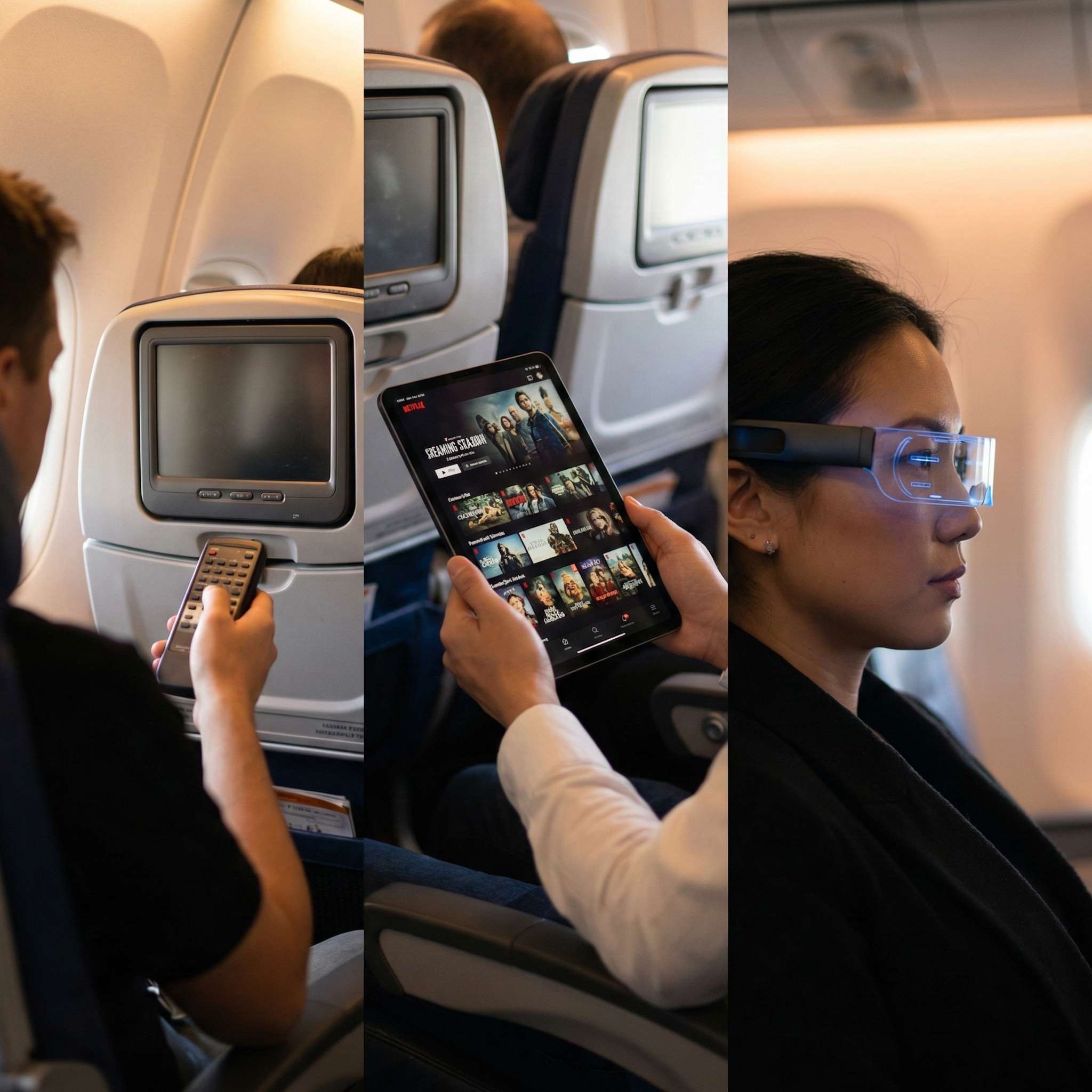
Modern transport offers passengers full-fledged entertainment that helps them spend their time comfortably.
Now, a trip is not just waiting, but an opportunity to watch a movie, listen to music, read a book, or play a game right from your phone.
How people used to entertain themselves
Previously, the choice was limited. On planes, one movie was shown to the entire cabin. Trains had magazines and newspapers. Sometimes, you could watch a movie in a common lounge. Everyone watched the same thing at the same time. Personal choice was out of the question.
Gradually, the first in-flight screens and in-flight media services appeared. You could choose a movie or music, but such systems were complex and expensive.
How entertainment works today
Today, wireless entertainment systems are used almost everywhere. Passengers connect to Wi-Fi and open a web portal on board the plane, train, or riverboat.
A passenger media portal appears on the phone screen, featuring movies, TV series, music, books, and games. All on-board media works within the local network and does not depend on external internet.
Video content is available on planes and other routes, as well as an in-flight online cinema, podcasts, audiobooks on planes, and games on planes for children and adults.
All of this forms comprehensive on-board entertainment that is convenient to use while traveling.
Why passengers love such systems
The main advantage is freedom of choice. Everyone watches what they like. Some watch a TV series, some listen to music, some play games.
Modern in-flight entertainment systems make the journey calmer, especially for families with children. Children's entertainment on planes and other routes helps keep children occupied and makes the journey easier for parents.
Such systems have become an important part of the service and are included in digital services for passengers.
Entertainment and services in one place
Modern platforms combine not only movies and music. It's no longer just a screen with a movie, but a full-fledged interactive entertainment system.
Through it, you can:
- Watch movies on planes and TV series on board
- Listen to audiobooks and podcasts
- Play games
- Use information services
Essentially, it's a convenient passenger media portal that's always at hand.
What awaits passengers next
Entertainment will become even more convenient and smarter. Systems will start suggesting movies and music based on interests, offering new releases, and creating personal selections.
The direction of OTT content on planes and other types of transport is developing. Subscriptions and personalized recommendations are appearing.
More and more carriers are implementing smart IFE systems that combine entertainment, services, and control in one interface.
The journey as part of comfort
Today, an on-board multimedia system has become as common as air conditioning or a power outlet. Passengers expect entertainment to be available immediately after boarding.
Entertainment on planes, trains, and river routes makes the journey more pleasant and helps to spend time productively. This is how passengers want to see modern transport.