
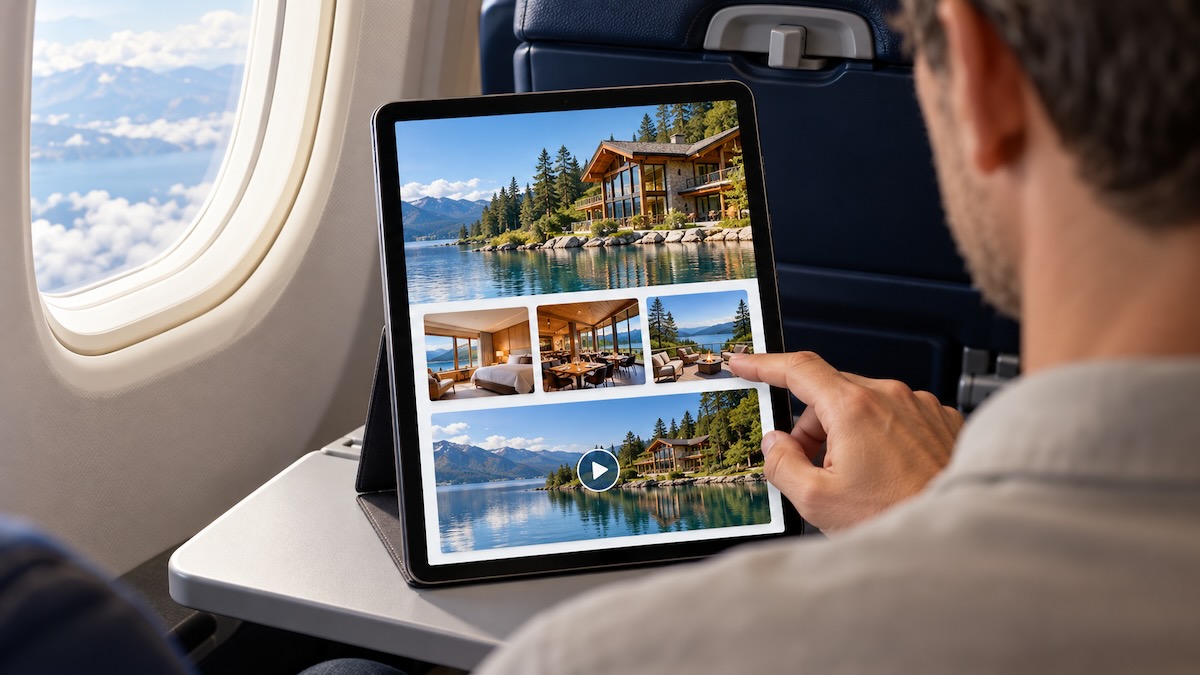
A passenger browses the in-flight portal and notices an advertisement for a hotel complex. The photograph catches their eye, the offer sparks interest — the person clicks on the banner. The advertiser's page opens on the screen, where they can view rooms, learn about the facilities, and watch a video presentation. An introduction that began with a single image continues right during the flight.
In Wi-Fly, this continuation takes the form of a microsite — a dedicated brand page within the portal. Here, company descriptions, product or service information, photos, and videos are placed. The banner draws attention to the offer, while the microsite provides space for a detailed story. The passenger chooses how to spend their time: reading the description, scrolling through images, or playing a video.
The page and its materials are uploaded to the in-flight media server in advance. After clicking on the banner, the passenger's device receives data via the local Wi-Fi network. External internet is not required to view the content: Wi-Fly's technical foundation allows working with materials already on board.
For a hotel complex, such a page could serve as a small tour. An overview shows the location of buildings and the surrounding landscape, photos introduce the rooms and public spaces, and a video conveys the atmosphere of relaxation. Text complements the visual part with information about services and accommodation options. The passenger gets the opportunity to form an impression of the place even before they start planning their next trip.
The same principle applies to other advertisers. A manufacturer can show a product up close and demonstrate its use. A museum can introduce an exhibition and individual exhibits. A tourist attraction can reveal the features of a route through photographs and video materials. In each case, transitioning from the banner allows answering questions that arise during the initial acquaintance with the offer.
For the company, this is an opportunity to present a product within the Wi-Fly in-flight environment, developed by "Oblako." The story remains accessible at the moment the passenger shows interest. They just need to continue viewing on their smartphone or tablet to move from a general impression to details.
The advertiser also receives information about audience response. Wi-Fly provides statistics on impressions and interactions with advertising materials. This helps evaluate interest in placement and consider passenger reactions for further campaign development.
After getting acquainted with the page, the traveler has more information for making a choice: what the hotel looks like, how the product differs, what can be seen on the excursion. The banner becomes the beginning of a meaningful interaction with the brand, which can influence the passenger's plans after arrival.