
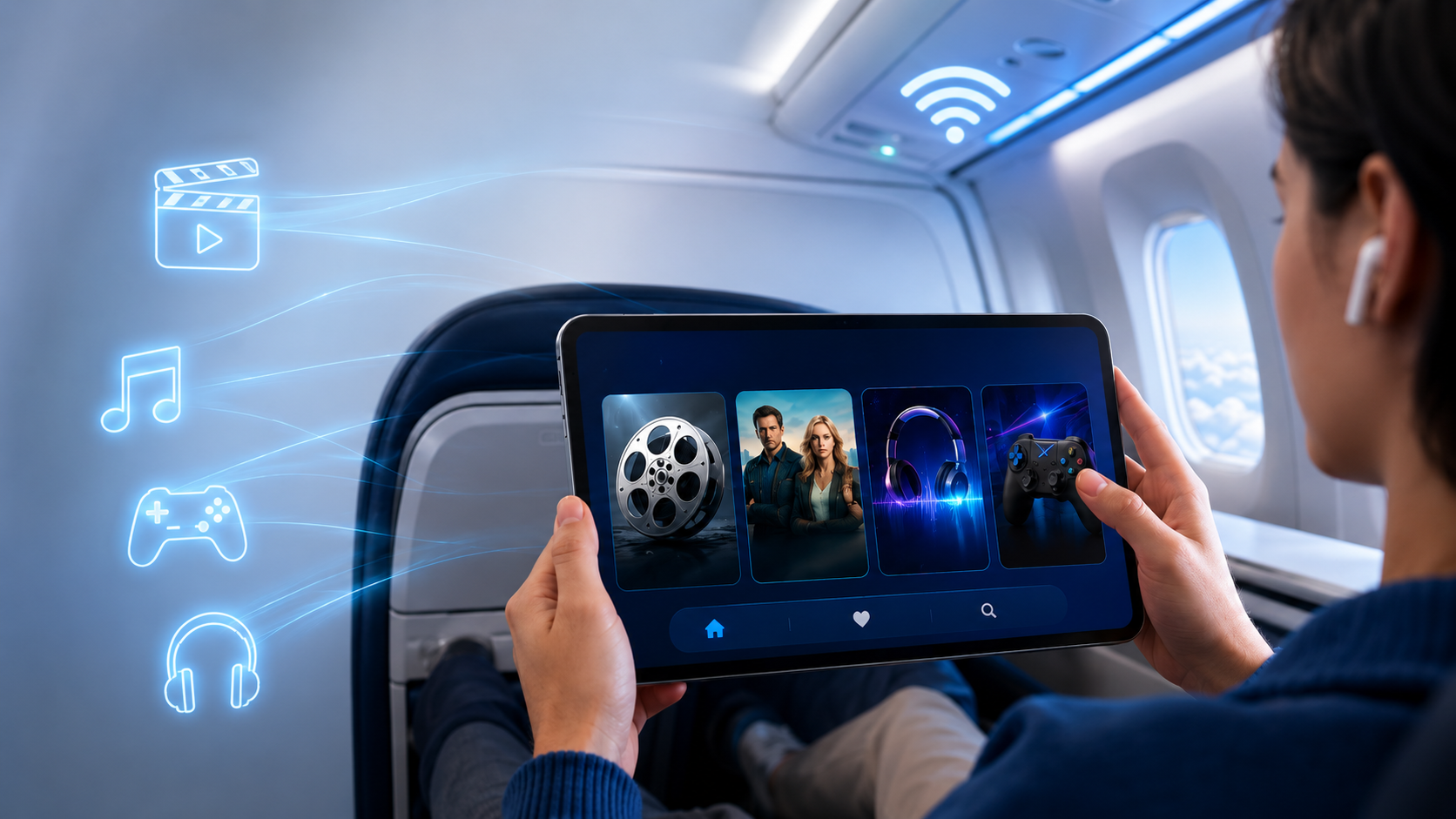
In-flight entertainment has long since ceased to be just a screen in the seatback. More and more often, the media service functions as a local portal: passengers connect to the aircraft’s internal Wi-Fi network, scan a QR code, or open the home page to access the catalog from their smartphone, tablet, or laptop.
This approach is used by the “Etbox” hardware and software complex and the Wi-Fly digital platform. It is a standalone solution for transportation: content is stored on an onboard server, so passengers do not need access to the global internet. The portal features entertainment, service information, in-flight shopping, and tools for communicating with the crew.
Movies and TV Shows
The main section of Wi-Fly is the video catalog. It features movies, TV series, documentaries, children’s programs, and other licensed content. Passengers can choose a short episode for a one-hour flight or a feature-length movie for a long flight.
The catalog features Russian online movie theaters and media partners, including Premier, Okko, and Wink. For the airline, this is a way to turn travel time into a full-fledged media experience, and for passengers, it’s an opportunity to avoid relying on pre-downloaded movies and the quality of mobile connectivity.
Another plus is local content. Documentaries about the region, the destination city, or the route can serve not only as entertainment but also as a gentle introduction for passengers to their destination.
Music
For those who don’t want to watch videos, the portal offers music playlists. This format is especially popular on long flights: music helps passengers take their minds off things, reduce stress, and make the flight more relaxing.
The catalog includes relaxation playlists, background music, and audio selections for sleeping or quiet relaxation. Passengers choose their own experience: watch a TV series, listen to music through headphones, or simply keep themselves occupied during the flight.
Games
Another way to pass the time is with games. Wi-Fly lets you add classic games like “2048,” “Battleship,” and “Sudoku.” This section is suitable for both adults and children: the games don’t require complex controls and launch quickly on a passenger’s personal device.
If a passenger isn’t traveling alone, multiplayer modes help turn the flight into a shared entertainment experience. This is especially relevant for family trips and group flights.
Chat and Communication with the Crew
The in-flight portal can serve not only as entertainment but also as a service tool. Through its internal sections, passengers can chat, receive flight information, and contact the crew.
The chat feature can be used for simple requests: to ask a question about service, request assistance, or call a flight attendant. For the crew, this is an additional communication channel that reduces the number of verbal requests and helps process inquiries more quickly.
In-Flight Marketplace
Wi-Fly also supports e-commerce scenarios. During the flight, passengers can select merchandise, food, or beverages through the portal. This format is convenient because orders are placed from a personal device, and the crew receives a clearer structure of requests.
For the airline, this is an additional source of revenue and a way to develop the service without installing heavy equipment in every seat. For the passenger—it’s a familiar digital experience: open the portal, select a product, and place an order.
Advertising and Special Projects
The in-flight portal also offers advertising opportunities. In the confined space of an airplane, passengers have fewer distractions, so banners, videos, branded content, and special projects achieve greater visibility with the audience.
Ad formats can be targeted to specific routes, flight audiences, or particular sections of the portal. The airline gains an additional commercial platform, while the brand gains access to passengers at the very moment they are already engaged with the digital service.
How Wi-Fly Changes the Passenger Experience
Essentially, Wi-Fly transforms the aircraft’s internal network into an in-flight digital environment. It’s not just “Wi-Fi for the sake of the internet,” but a local portal that works even without an external connection.
Passengers don’t need to download movies in advance, search for games, or wait for a stable signal. Everything is available on board: movies, TV shows, music, games, chat, shopping, and flight information. For the aviation industry, this is another step toward a more comfortable flight experience, where a passenger’s personal device becomes a personal screen, remote control, and service window all at once.