
An introduction to a product can start with a short story, continue with a specific offer, and lead to an interactive action. Wi-Fly provides video clips, static and animated banners, as well as individual special advertising projects for this purpose. Each format solves its own task, allowing the brand to choose the depth of interaction with the passenger.
The difference can be conveniently illustrated with the example of a luggage manufacturer introducing a new collection to travelers. Their potential customer is already on a trip: they recently packed, checked in, and moved through the airport. Therefore, the properties of a travel accessory can be easily linked to an experience the person is familiar with.
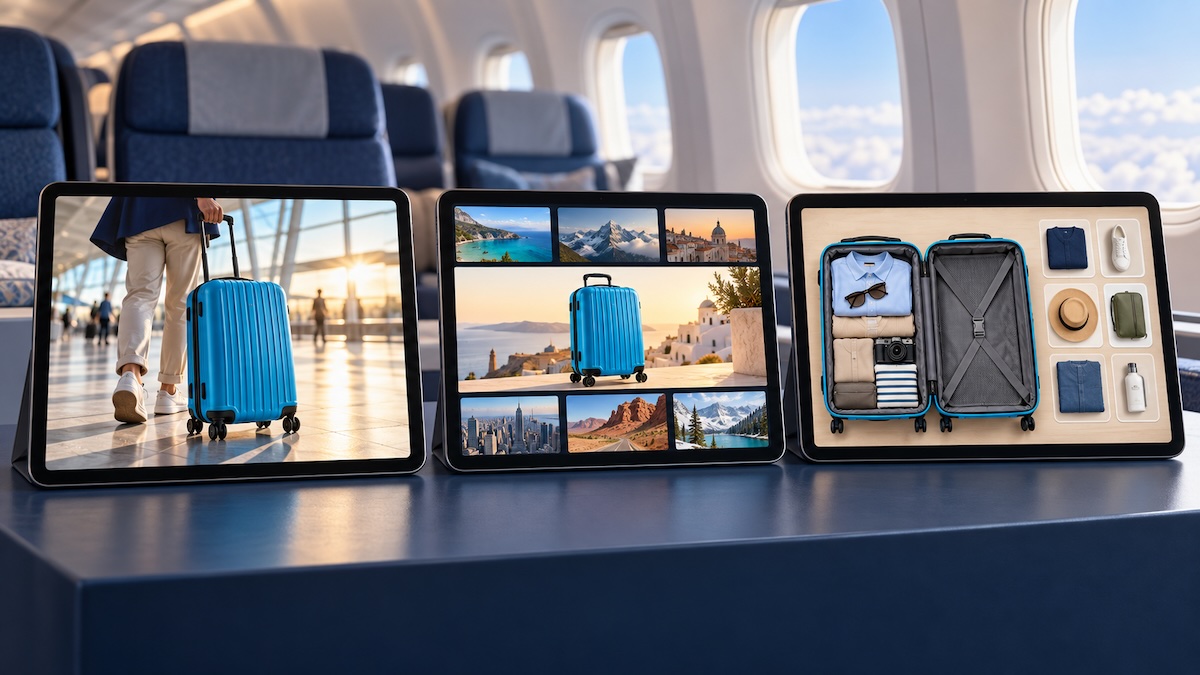
A video clip allows showing the product in action. The suitcase accompanies the hero on their journey: moving through the terminal, opening in a hotel room, holding items for the next trip. Through such scenes, the brand can tell about the product's design and its everyday use. Full-screen video advertising on Wi-Fly plays on the passenger's personal smartphone or tablet, allowing them to examine details. The platform supports Full HD quality videos.
A banner provides an opportunity to focus on a single offer. For the same manufacturer, this could be a new collection, a specific model, or a special price. An image of the product and a short message appear in the portal interface, and a clickable element allows for further engagement. As part of a campaign, a banner can become an entry point to a separate brand project within Wi-Fly.
A special project reveals the product through the passenger's own participation. For a luggage manufacturer, such a scenario could be an interactive travel preparation: the user chooses a weekend trip, business trip, or vacation, packs virtual luggage, and learns about the features of a suitable model. Capacity, compartment organization, and other product properties become part of a clear task. This is an example of a possible mechanic: the company "Oblako" develops special projects individually for the advertiser's needs.
In one campaign, these formats can complement each other. Video creates a first impression, a banner brings attention back to the offer, and an interactive project provides a reason to explore the product in more detail. At the same time, each material retains its independent meaning: a passenger can get acquainted with the brand through any of them.
The technical basis for placement is the in-flight portal. Prepared materials are stored on the media server and are accessible via the local network during the flight. The advertiser receives statistics on impressions and interactions, which helps evaluate how the audience responds to the placement.
Thus, a single product gets several ways to be present during a trip — from a brief appearance on screen to getting acquainted with its capabilities through the passenger's own experience. Wi-Fly allows combining these methods into a common advertising campaign, maintaining the connection between the brand's story, its offer, and the traveler's interests.