
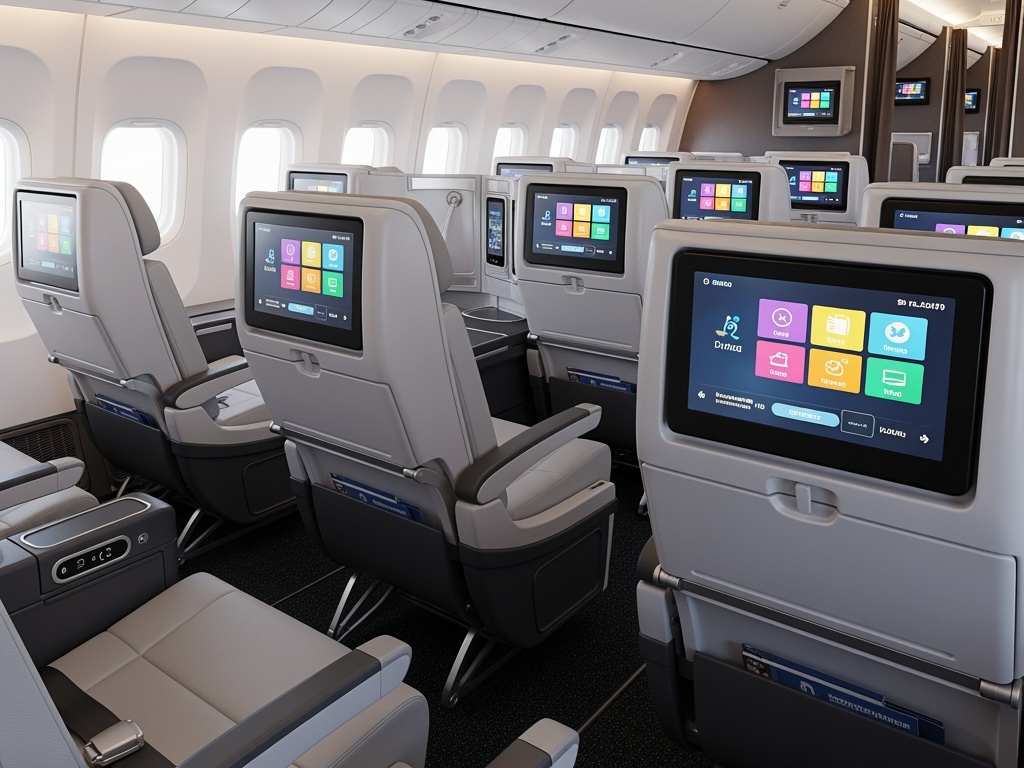
When the plane gains altitude and the city is left somewhere below, passengers experience a rare sense of pause. There's not much to do, nowhere to rush, and time suddenly stops being an enemy. The phone is put away, tasks are postponed, and ahead lies only the flight. It is at this moment that a person truly notices the in-flight entertainment system, or IFE, for the first time. Not as a set of functions and buttons, but as something natural, almost imperceptible, as if it had always been part of the journey.
Not so long ago, in-flight entertainment looked completely different. One screen for the entire cabin, a shared movie, and headphones that constantly crackled and slipped off. Whether you wanted to watch or not, there wasn't much choice. Today, IFE is much calmer and more logical. Each passenger is alone with their screen, their choice, and their rhythm. Some immediately start a movie, some look for music, some browse the catalog for a long time and eventually settle on something simple. And some simply watch the flight map and return to it from time to time, as if checking how far they have already flown.
The modern IFE system has long ceased to be just an onboard cinema. It is a complete media service, specially designed for travel. It offers movies and TV series, music, audiobooks, podcasts, games, and children's content. All of this is available directly during the flight and does not require an external internet connection. Passengers open the screen and enter a small but well-thought-out space where they can spend several hours without unnecessary tension and fuss.
This is especially noticeable on long flights. Over time, it becomes clear that attention tires faster than it seems. Watching movie after movie is difficult, and reading is not always possible either. At some point, the plot starts to annoy, and the characters become tiresome. Then IFE stops being entertainment in the usual sense and turns into a way to simply pass the time during the journey. Some turn on a calm video, some listen to music, some leave the screen on in the background, not expecting anything specific from it.
With the development of wireless solutions, using IFE has become even easier. Now you don't have to be limited to the seatback screen. Many passengers connect to the system from their phone or tablet and use it as a personal media portal. This is familiar and convenient, especially for those who don't like extra screens around. The airplane is gradually transforming into a self-contained digital space that lives its own life and is independent of the ground.
However, behind all this apparent simplicity, IFE hides complex internal workings. Content is stored on onboard servers, distributed among screens and devices, updated, and adapted for specific flights. Passengers don't see this, and largely, they shouldn't. For them, only one thing matters – that the system works smoothly, doesn't freeze, and doesn't require unnecessary actions.
Over time, IFE has become an important part of the overall flight experience. It doesn't distract from the journey; on the contrary, it helps to make it smoother. The ability to watch a movie, listen to an audiobook, or simply leave a calm video on the screen makes the flight less tiring and more personal. Everyone gets their own small space where they can spend time exactly as they wish.
Today, the presence of IFE is considered normal. If it's absent, it immediately stands out and creates a feeling that something is missing. And if it's there and works well, people hardly think about it. And perhaps that's the best indicator that the in-flight entertainment system has found its place. It no longer surprises or demands attention. It simply makes the flight what it should be – calm, understandable, and a little more comfortable.