
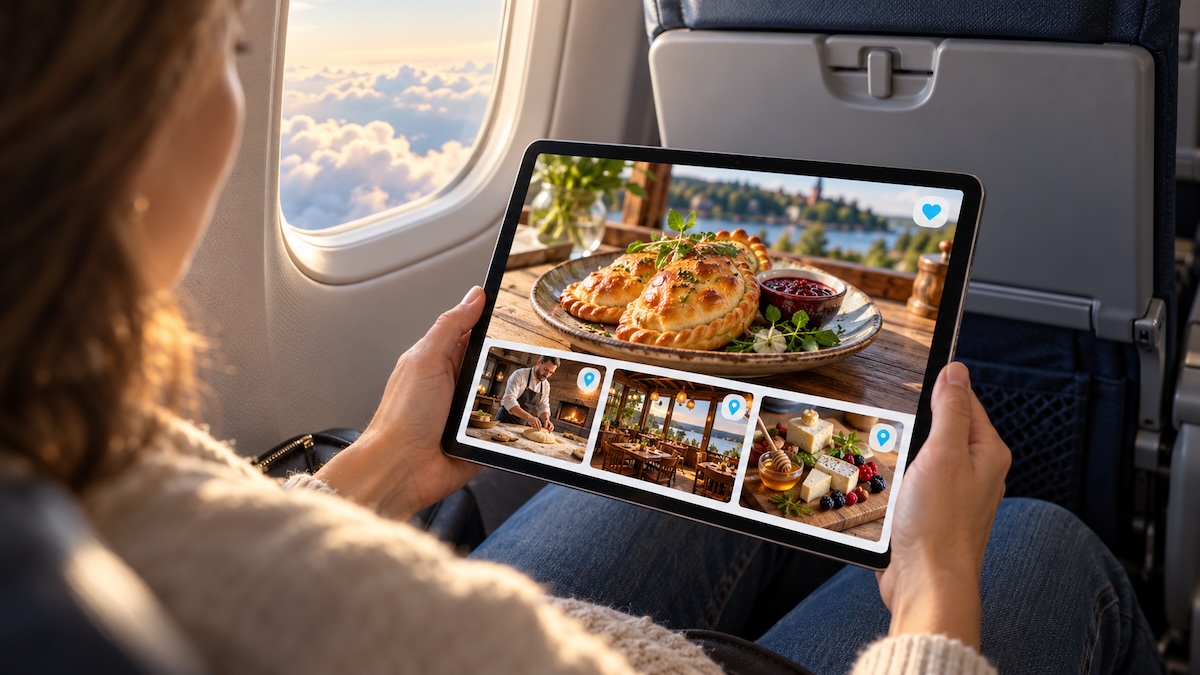
A trip to a new city is also an introduction to its flavors. Local dishes, family recipes, and products from small farms can be as interesting to a tourist as museums and attractions. The onboard portal allows this introduction to begin during the flight, as passengers choose entertainment and plan their activities after arrival.
With Wi-Fly, gastronomic projects get the opportunity to reach travelers through video ads, banners, and branded content. A restaurant can invite guests for dinner, a regional producer can introduce their assortment, and a gastronomic tour organizer can offer an itinerary through local farms and establishments. These offers become part of the digital environment that passengers use on their own smartphones or tablets.
Targeting video ads by route helps connect advertising with the travel destination. For regional businesses, this is an opportunity to tell their story to an audience heading to the desired city. The offer to try local cuisine gains a specific context: an introduction to a dish during the flight can continue at a table after landing.
The story behind a dish gives such contact substance. Behind a photo of a finished delicacy can be a family tradition, the work of local producers, or the chef's unique approach. Through branded content, a restaurant introduces passengers to its cuisine even before their first visit. Travelers then have a reason to choose an establishment, driven by an interest in a specific dish and place.
For regional food producers, the onboard portal opens up a similar opportunity. Cheese dairies, confectioneries, apiaries, and farms can introduce passengers to their products through their origin and history. Such an offer can appeal to both those who want to try local products during their trip and those looking for a gastronomic gift to take home.
Wi-Fly's advertising formats allow for a multi-stage introduction. A banner or video attracts attention, and a link to a microsite within the portal reveals the offer in more detail. A dedicated page can present a restaurant, product, or gastronomic event, introduce the assortment, and offer a promo code. Passengers can move from a first impression to exploring what interests them.
An additional form of interaction is branded games and quizzes. A gastronomic project can invite passengers to guess a dish by its ingredients or test their knowledge of the region's cuisine. Such a special project connects entertainment with the brand's theme, and a partner offer at the end can be a reason to continue the acquaintance after arrival.
For gastronomic routes, the portal's capabilities extend beyond advertising a single establishment. Within an individual special project, a restaurant, a local producer, and a tasting venue can be united by a common story. For passengers, this is a possible scenario for exploring the region, and for advertisers, it's a joint offer where the services of the participants complement each other.
Moreover, access to onboard materials does not require a constant connection to the external internet. Wi-Fly operates via a local Wi-Fi network, and content is stored on the onboard server. Passengers can explore advertising materials and offers during the flight using their own devices.
Advertisers have access to statistics on impressions, views, and interactions with materials. This helps evaluate which stories and offers generate passenger interest. However, viewing an ad and a subsequent visit to a restaurant are different stages: using a separate promo code can help link a guest's visit to the onboard campaign.
For Oblako company, gastronomic projects are one of the applications of Wi-Fly's advertising capabilities. The platform connects businesses with passengers during their journey, when local cuisine becomes part of their interest in a new city. Thus, a dish seen on screen can turn into a dinner order, a production story into a reason to visit, and a regional product into a gift that the traveler takes home.