
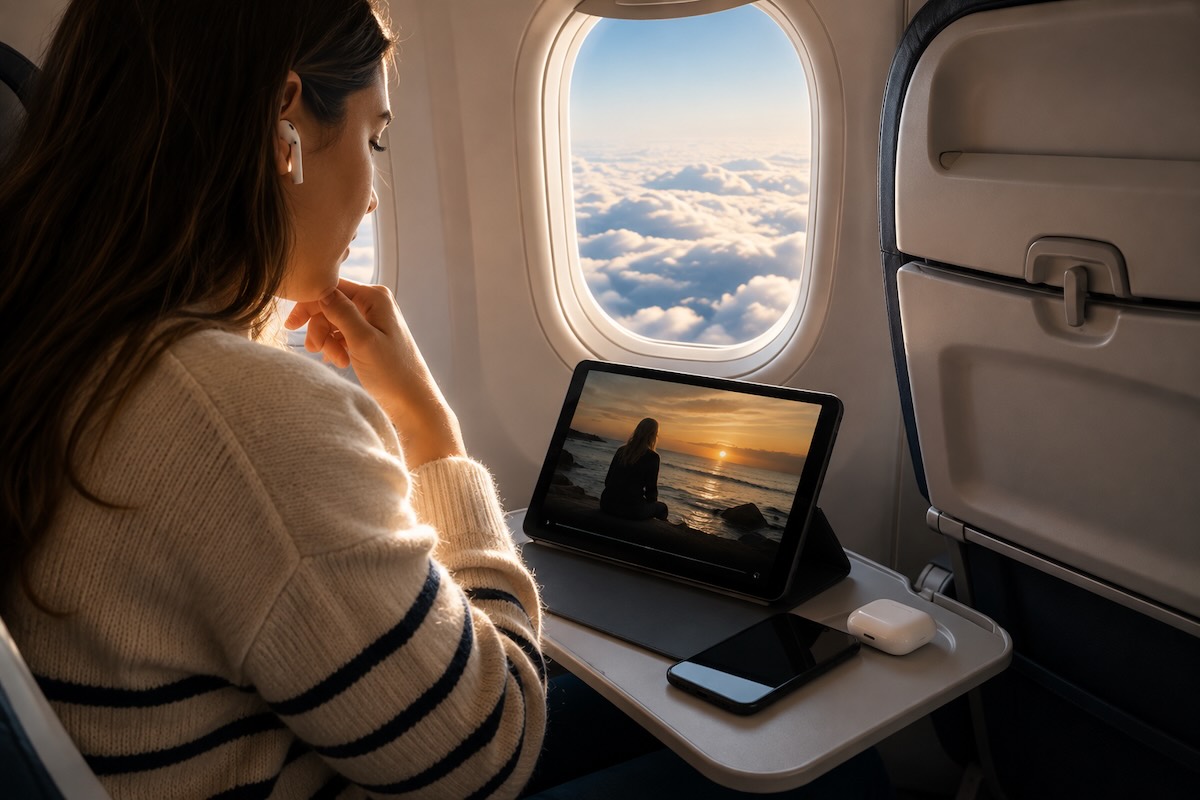
Not long ago, a screen in the seatback was considered an almost essential attribute of a modern long-haul aircraft. Today, this approach is changing. Passengers now board with their own screens — a smartphone, tablet, or laptop — and increasingly, this is becoming the primary device for in-flight entertainment.
In aviation, this approach is known as Bring Your Own Device, or BYOD. Instead of a separate display in the seat, passengers connect to the onboard Wi-Fi network and access the airline's multimedia portal through their browser. This portal can offer movies, TV series, music, books, flight information, and additional services.
The main advantage for passengers is a familiar digital environment. They don't have to figure out the interface of an unfamiliar multimedia system or use a built-in screen that might be significantly inferior to a modern tablet or smartphone. Their own device is already configured to their preferences: brightness, controls, text size, headphones, and other settings are all familiar.
Furthermore, mobile electronics are updated much faster than aviation equipment. An aircraft can operate for decades, while generations of smartphones and tablets replace each other every few years. Therefore, the device a passenger brings with them is often faster and more technologically advanced than a display installed in the cabin several years ago.
Modern in-flight multimedia solutions are built around this model. For example, the Russian IT company "Oblako" is developing the Wi-Fly platform for passenger transport. The system creates a local Wi-Fi network onboard, to which passengers connect their own smartphone, tablet, or laptop and access multimedia content and services through a browser. For the onboard portal itself to function, a constant internet connection for the aircraft is not needed: content and core functionality are located directly on the onboard server.
This approach allows a passenger's personal device to become not just a screen for watching a movie, but an interface for interacting with the airline. Through the onboard portal, flight information, entertainment content, and additional services can be provided. In "Oblako" solutions, for instance, video and audio content, an interactive flight map, and options for ordering goods, food, or drinks are available.
For airlines, the advantages of BYOD are not only related to passenger convenience. A classic built-in entertainment system is not just displays. It includes wiring, control units, server equipment, and other components that need to be installed, maintained, and eventually upgraded.
The less such equipment needs to be placed directly in passenger seats, the simpler the cabin infrastructure can be. Moreover, the software part of the digital service can be developed without replacing dozens or hundreds of physical displays: updating the interface, adding content, and connecting new services.
Ultimately, BYOD changes the very approach to onboard entertainment. Airlines can focus less on installing another screen in a seat and more on what the passenger will see on their own device and what services they can access through it.
And if previously a screen was an essential part of an aircraft's equipment, now it is increasingly sufficient to create a full-fledged digital environment around the device already in the passenger's pocket. This is precisely the task that platforms like Wi-Fly solve: the passenger brings the screen, and the airline provides the content and service.