
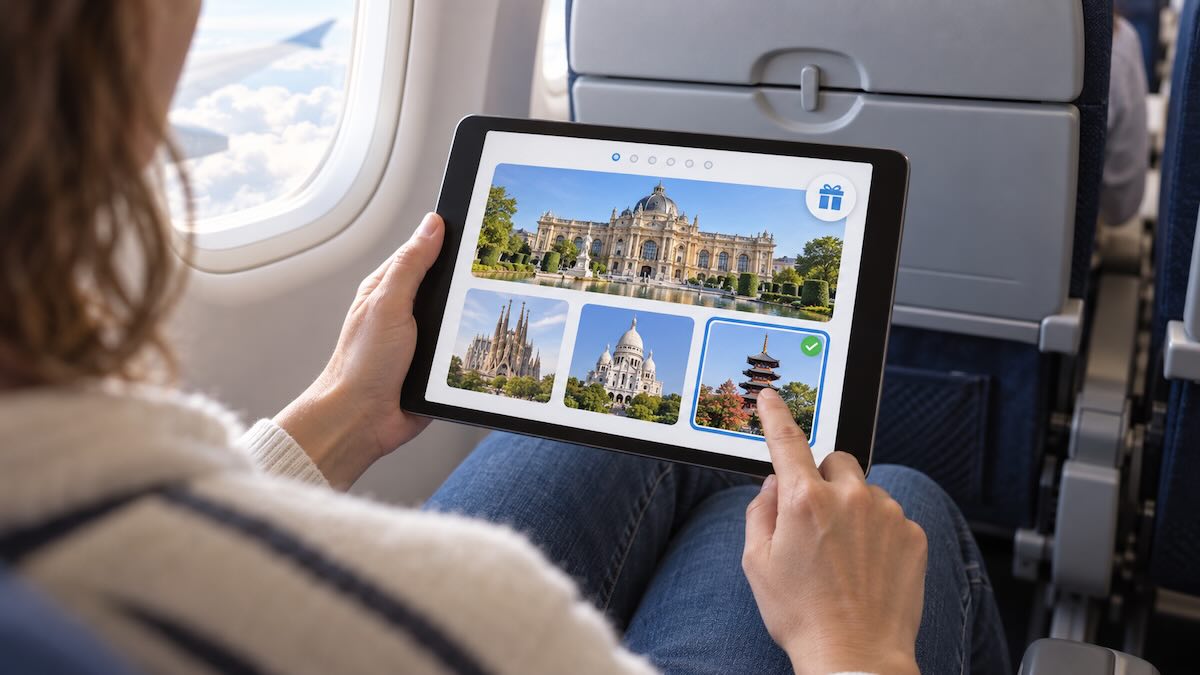
Guessing a city from a photo, packing a virtual suitcase, or testing knowledge of local cuisine – such tasks can be the beginning of a passenger's acquaintance with a brand. To participate, simply open the onboard portal on a smartphone or tablet. The company gets the opportunity to tell its story through a small adventure, where the traveler chooses answers, scores points, and sees the result.
This is the foundation of game engagement: a person is offered a clear goal and the opportunity to immediately assess their success. Curiosity prompts them to open the quiz, the desire to test themselves – to answer questions, and the nearing end – to complete the game. However, it's impossible to hold attention with just a logo: even a short game must be interesting in itself.
"Oblako" company, developer of the Wi-Fly onboard platform, includes games and quizzes among its branded content formats and offers custom development of special advertising projects. The platform operates via a local Wi-Fi network, and content is stored on an onboard server. Thanks to this, passengers can participate in the game without access to the external internet.
Developing such a quiz begins with defining the goal: what should happen after it's completed? One company might want to introduce passengers to a new product, another – to pique interest in an excursion route, a third – to offer a reason to visit a restaurant after arrival. The plot, duration, and final offer depend on this. Trying to tell everything at once risks turning entertainment into an advertising questionnaire.
A museum, for example, could offer to guess the purpose of unusual exhibits, and a restaurant – to match regional dishes with their ingredients. A tourist complex would benefit from a small quest about local attractions. In each case, the brand becomes part of the task: the passenger learns something about the place or service even before encountering a specific offer.
For such a quiz, a few questions with short explanations for the answers are sufficient. Even a mistake can maintain interest if it's followed by an unexpected fact, rather than a demand to start all over again. Ease of completion is also important, especially during a flight.
A passenger might hold their phone with one hand, be distracted by service, or pause to listen to a crew announcement. Therefore, the game should include large buttons, short texts, soundless operation, and the ability to pause. Fast-paced tasks with small controls might be inconvenient in such an environment.
The completion of the game can be a partner's offer: a discount on an excursion, a dessert with an order, or a bonus for a service. The conditions for receiving and using the reward should be clear in advance. If a promo code is needed after landing, the passenger needs an easy way to save it – for example, by taking a screenshot.
A successful onboard quiz leaves the passenger with a small story, a new fact, or a useful idea for their trip. It is this experience that gives the company a chance to be remembered, and an acquaintance that began in flight can continue after arrival – with a visit to an exhibition, ordering dinner, or choosing an excursion.